SUN KISSED CONSULTING & LANDSCAPING
Operational Excellence for Landscapes — Across All Climates, All Conditions, All Property Types
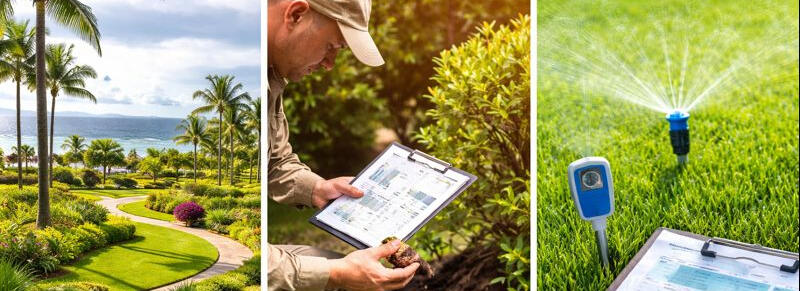
Landscapes perform at their best when plants, people, systems, and expectations are aligned. They fail when even one of these components breaks down.SKC&L brings 38 years of multi-climate, multi-soil, multi-property expertise to landscaping companies, HOAs, property managers, and commercial properties seeking reliable performance, improved plant health, and long-term cost efficiency.
System-Level Expertise
We diagnose and correct issues across the entire landscape operations ecosystem — from plant and soil conditions to irrigation strategy, workflow design, crew development, and long-term planning. Our expertise spans tropical, desert, temperate, coastal, volcanic, sandy, and clay-heavy environments.
Crew development (including building new teams)
Workflow & efficiency optimization
Plant & soil diagnostics
Irrigation troubleshooting
Right-plant-right-place adaptation
Multi-climate planning
Property-wide assessments
Long-term improvement planning
What Makes SKC&L Different
System-Level Solutions
We evaluate how plants, people, processes, and property expectations interact to find root causes—not just symptoms. This results in durable, system-level solutions that deliver consistent improvement.
Text
Clear, Actionable Plans
Every recommendation is specific, prioritized, and tied to measurable outcomes. No vague suggestions or generic templates—just practical solutions designed to be implemented immediately.
Crew Development & Training
We build and strengthen landscape crews using proven workflow systems that reduce call-backs, improve efficiency, and raise quality across the property. Training can focus on maintenance, plant care, troubleshooting, or operations.
Multi-Climate Mastery
With 38 years of experience across tropical, desert, temperate, coastal, sandy, clay-heavy, and volcanic landscapes, SKC&L provides guidance suited for any climate or soil condition.
Integrated Plant–People–Process Approach
Landscape performance relies equally on biological needs, operational systems, and human behavior. We align these elements so they support one another instead of working against each other.
How Our Consulting Process Works
A clear, structured process designed to diagnose problems quickly, reduce wasted effort, and produce actionable results.
Schedule Consultation
Choose an audit, operational review, or training engagement based on your needs.
Provide Property Details
Provide photos, videos, plant lists, irrigation details, or crew information for review.
Comprehensive Analysis
We evaluate plant health, soil conditions, irrigation performance, workflows, and training needs.
Actionable Roadmap
You receive clear priorities, recommended actions, and a structured improvement plan.
Ongoing Support (Optional)
Retainer options provide continued guidance, seasonal planning, and troubleshooting support.
What you receive:
• A prioritized action list (what to do first / next / later)
• Root-cause diagnosis (not symptom chasing)
• Clear operational recommendations
• Seasonal planning guidance
• Optional follow-up support
Sample Deliberable:
Services
SKC&L offers structured consulting services designed to diagnose problems quickly, improve operational efficiency, and deliver measurable improvements across landscapes of any scale or climate.
Diagnostic Landscape Audits
Starter Landscape Audit — $500
For: Homeowners • Small Properties • Landscaping Businesses • HOAs
Client selects up to 5 topics of concern to focus analysis on
• Photo and video-based property review
• Identification of plant, soil, irrigation, and maintenance issues
• 5+ page written summary with recommendations
• 20-minute follow-up consultation
Standard Operational & Landscape Audit — $1,500
For: HOAs • Property Managers • Landscaping Companies • Commercial Properties
• Comprehensive photo and video review
• Evaluation of plant health, irrigation systems, and maintenance practices
• Workflow and efficiency assessment
• 20+ page written report
• 60-minute consultation
• 30 days of follow-up questions
Premium Landscape Operations Audit — $2,500
For: Larger HOAs • Multi-Crew Landscaping Companies • Commercial Properties • Resorts
• All Standard Audit features
• Full operations and efficiency analysis
• Crew structure and performance review
• Plant palette and irrigation strategy optimization
• 12-month improvement roadmap
• Extended support
Landscape Operations & Efficiency Consulting
For: Landscaping Businesses • HOAs • Commercial Properties
• Diagnose workflow inefficiencies and labor waste
• Improve maintenance consistency and quality
• Optimize scheduling, routing, and crew deployment
• Reduce call-backs and long-term costs
Pricing: $750–$6,000 depending on scope and duration
Crew Development & Training Programs
For: Landscaping Businesses • Large HOAs • Commercial & Resort Properties
• Build new crews or strengthen existing teams
• Standardize maintenance workflows
• Improve plant care, troubleshooting, and irrigation fundamentals
• Seasonal planning and leadership development
Pricing: $1,500–$6,000 depending on crew size and objectives
Long-Term Landscape Improvement Plans
For: HOAs • Property Managers • Commercial Properties • Resorts
• 6–24 month phased improvement roadmap
• Prioritized upgrades and maintenance restructuring
• Budget-aware planning
• Seasonal and climate-based adjustments
Pricing: $1,200–$3,500
On-Site Commercial & Resort Assessments
For: Resorts • Hotels • Commercial Campuses • Destination Properties
• Hands-on diagnostics and operational review
• Executive-level reporting
• Staff and workflow observation
• Strategic recommendations tailored to property goals
Pricing: $4,500 + travel
Structured Monthly Support
Ongoing advisory support for organizations that want consistent improvement, accountability, and expert guidance beyond a one-time audit.
Most clients choose one of the structured retainers below. Custom advisory options are also available.
HOA Support Retainer — $250/month
For: HOAs • Small Property Managers
• One scheduled consultation per month
• Photo and video-based troubleshooting
• Seasonal planning guidance
• Plant health and maintenance advice
Best For:
Boards or managers seeking expert input without a full-time consultant.
Landscaping Business Retainer — $400/month
For: Landscaping Companies • Owner-Operators
• Monthly strategy and troubleshooting call
• Workflow and efficiency guidance
• Crew management and development support
• Ongoing plant, irrigation, and maintenance advice
Best For:
Businesses seeking better consistency, fewer call-backs, and stronger crews.
Commercial & Resort Retainer — $600/month
For: Commercial Properties • Resorts • Large HOAs
• Monthly executive-level consultation
• Operational and irrigation strategy guidance
• Seasonal planning and reporting input
• Priority response for time-sensitive issues
Best For:
Properties where landscape performance impacts brand, guest experience, or asset value.
Custom Advisory Retainer (Flexible Option)
For organizations needing evolving or specialized support, a flexible advisory retainer is available.
Core Advisory Retainer — $350/month
• One monthly consultation
• Ongoing email/photo/video support
• Seasonal prioritization and planning
• General troubleshooting and advisory support
Optional Add-Ons (Monthly):
• Additional consultation............................
• Crew training support..............................
• Irrigation strategy & troubleshooting......
• Operational workflow review...................
• Priority response (48-hour turnaround).
+ $150/month
+ $200/month
+ $150/month
+ $200/month
+ $100/month
* Add-ons may be adjusted month-to-month as needs evolve. *
FAQs
Can remote consulting really diagnose landscape problems accurately?
Yes. With clear photos, videos, irrigation details, and maintenance information, we can identify the majority of plant, soil, irrigation, and operational issues without being on site. On-site assessments are reserved for properties that truly require hands-on evaluation.
What types of properties do you work with?
We work with HOAs, property managers, landscaping companies, commercial properties, resorts, and select homeowners. If landscape performance, efficiency, or long-term planning matters, we can help.
How quickly can we get started?
Most consultations and audits can begin within 7–10 days, often sooner. Retainers typically begin immediately after an initial consultation.
Do you specialize in a specific climate or region?
Our expertise spans tropical, desert, temperate, and coastal climates and sandy, clay-heavy, silty, loamy, chalky, and/or volcanic environments. Recommendations are always adapted to local conditions.
What if we’re not sure which service we need?
That’s common. A brief consultation will determine the most effective starting point and prevent unnecessary work or expense.
Do you offer ongoing support after an audit?
Yes. Many clients choose a monthly retainer to support implementation, seasonal planning, and continued improvement.
Is our information kept confidential?
Absolutely. All property information, reports, and discussions are treated as confidential.
Do you work outside Hawaiʻi?
Yes. SKC&L provides remote consulting worldwide and on-site assessments for select commercial and resort properties. Our methods are effective across all climates, soil types, and property scales.
About Sun Kissed Consulting & Landscaping
Sun Kissed Consulting & Landscaping (SKC&L) is led by a senior landscape professional with 38 years of hands-on and advisory experience spanning residential, commercial, institutional, and destination properties across diverse climates and soil conditions.SKC&L’s work has included deep operational involvement and system-level consulting for medical-quality nurseries, botanical gardens, golf courses, resorts, HOAs, commercial properties, and landscaping businesses—environments where plant health, consistency, and failure risk are tightly scrutinized and highly visible.Rather than focusing on surface-level fixes, SKC&L specializes in diagnosing root causes and aligning plants, people, processes, and expectations to deliver durable, measurable improvement. This approach integrates biological realities with operational design, crew performance, irrigation strategy, and long-term planning.With experience across tropical, desert, temperate, coastal, sandy, clay-heavy, and volcanic environments, SKC&L provides clear, practical guidance suited for properties and organizations operating under real-world constraints and high performance standards.

The Real Value of Landscaping on Kaua‘i:
What We Pay For, What We Get, and What We’re Losing
An independent perspective on why landscaping costs keep rising on Kaua‘i and why outcomes feel increasingly uncertain despite everyone’s best intentions from Sun Kissed Consulting & Landscaping
This paper was written to address a question quietly shared by homeowners, property managers, and landscape professionals across Kauaʻi:Why do landscaping costs keep rising while confidence in outcomes seems to be slipping, even when everyone involved is acting in good faith?This is not a critique of individuals or businesses. It is an examination of the economic and structural forces shaping the island’s landscape economy, and why understanding those forces matters before solutions can be discussed.
A Quiet Uncertainty
Most Kaua‘i property owners and managers know that familiar unease… Standing on a freshly mowed lawn, scanning the edges, and wondering if the landscape looks quite as it should for what it costs. The invoice always arrives right on schedule, but results seem to shift with the weather, the crew, or the season. You tell yourself it’s island life, everything’s harder here, everyone’s doing their best. And that’s true. Yet somewhere between the cost of paradise and the pace of its upkeep, a quiet question lingers: what exactly are we paying for?On Kaua‘i, the math behind landscaping has never been simple. This isn’t the mainland, where materials arrive overnight and workers can afford to live within twenty minutes of the job. Here, every bag of mulch, gallon of fuel, and hour of labor is shaped by distance, scarcity, and the steady grind of cost-of-living pressure. Landscapers work in the same economy as the clients they serve — just from the other side of the paycheck. And while property owners shoulder rising budgets, the people doing the work shoulder rising impossibilities.Most homeowners don’t suspect dishonesty from their landscapers; most landscapers aren’t shortchanging effort. The truth is subtler, yet more universal. Everyone is straining within a system that no longer balances. Even managers and contractors with the best intentions are caught in a loop of expectations set by mainland norms but anchored in island realities. The result is an ecosystem where everyone pays more than they’d like, yet few receive what they imagined.
And so, invoices keep arriving, lawns keep growing, and that quiet uncertainty continues. Unspoken, unresolved, and shared by both sides of the same equation. So, what exactly are we paying for?
Paying for Peace of Mind
Most property owners don’t think of landscaping as an investment in soil or grass they see it as an investment in peace of mind. The point of hiring a professional is to know that the property will stay clean, green, and predictable without constant checking. Yet across Kaua‘i, that sense of security has grown surprisingly fragile. The lawns are still cut, the hedges still trimmed, everything is mostly green, and probably mostly healthy, but something about the relationship between price, consistency, and confidence feels off balance.Part of that tension comes from the way service expectations have shifted over time. What once felt like a premium standard - weekly mowing, neat edging, reliable crews - now feels like the bare minimum. Coconut trimming, tree trimming, hedge trimming, fertilizing, all another invoice to pay just to keep up. Meanwhile, costs continue to rise, not because of luxury, but because the island’s entire labor and logistics network has stretched to its limit. Many homeowners quietly wonder if they’re being overcharged.Even for property managers, whose work depends on cost control, the problem isn’t easy to name. Budgets are drawn tight, yet the workload never shrinks; every storm adds debris, every delay compounds the backlog. The equation rarely balances. The irony is that most people on all sides are doing the right things. Homeowners pay faithfully. Managers coordinate carefully. Landscapers work hard. The deeper truth is that pricing and expectations have drifted out of alignment. Not because anyone intended it, but because the island’s economic reality has shifted faster than its service models. To understand why this imbalance persists despite everyone’s good intentions, we have to look beyond individual properties and into Kaua‘i’s economic landscape itself.
The Gated Island Paradox
To understand why, it helps to zoom out. Kaua‘i is, in many ways, America’s most expensive gated community: a place where the cost of living mirrors San Francisco, but the infrastructure sometimes mirrors a developing nation. Every tool, part, and product touches the mainland before it touches the island. Every worker pays for paradise three times: once at the gas pump, once again in rent, and once more on everything else.With roughly seventy thousand full-time residents and fewer than thirty thousand housing units, the math doesn’t work for most working families. The median home price hovers near $1.3 million. Even wages that seem generous by mainland standards, $25 or $30 an hour, can’t cover a one-bedroom rental, let alone a mortgage. Many landscapers share housing, work multiple jobs, or quietly rotate between short-term leases as properties sell or convert to vacation rentals.This strain isn’t limited to private landscaping companies. The State and County grapple with the same shortages, too many acres, too few workers, and wages that can’t compete with the cost of living. Guinea grass grows waist-high along highways, blocking sightlines, with both native and invasive trees and shrubs threatening power lines. Parks and sports fields fall behind maintenance cycles that would be considered unacceptable anywhere else in the country. It’s not for lack of care; it’s simply that the economics of Kaua‘i stretch every workforce, public and private, past its limits.This imbalance creates the quiet contradiction at the heart of Kaua‘i’s landscape economy. The island’s properties, from resorts to modest homesites and private estates, depend on consistent, skilled outdoor labor. Yet the very conditions that define Kaua‘i make that labor harder and harder to sustain. When a worker can’t afford to live near the property they maintain, reliability becomes a privilege. When equipment costs 20–30% more due to double shipping, efficiency takes on a new meaning.The result isn’t negligence or inefficiency, it’s attrition. Landscapers leave for the mainland, where wages stretch further and housing is attainable. Businesses struggle to retain staff. Property managers struggle to find consistency. Homeowners absorb the visible symptoms: overgrown corners, missed weeks, plants looking dull or weak, and thinning crews without realizing they’re witnessing an economic tide, not a personal failing to somehow find reasonable service.This is Kaua‘i’s paradox in miniature: an island where paradise depends on labor that can barely afford to live within it. Fixing that imbalance won’t come from price negotiation or finding a “better deal.” It will come from rethinking how value circulates between those who pay for beauty, and those who preserve it. These island-wide pressures land squarely on the shoulders of local landscape businesses, who must reconcile mainland-based pricing expectations with Kaua‘i’s uniquely high costs.
At this point, many readers wonder whether they’re paying too much.
The more useful question is whether the system itself has been underpriced.
Pricing in Paradise
Business owners sit at the uneasy center of this system. They’re the ones balancing loyalty to employees with the realities of contracts that no longer reflect the island’s economics. Many use pricing formulas inherited from mainland operations, formulas that collapse under Kaua‘i’s logistics, housing, and shipping costs.A local business owner faces overhead mainland peers can hardly imagine: higher insurance premiums, longer repair times, expensive materials, inflated fuel prices, and labor shortages. Yet many are reluctant to raise rates for fear of losing contracts or alienating loyal clients. So they absorb the shortfall skipping new equipment, delaying raises, stretching crews thinner, putting in extra time themselves. When prices no longer reflect true operating costs, quality erodes. Not through neglect, but through inevitability.The outcome is predictable: burnout, turnover, and inconsistent service. Even the most dedicated business owners find themselves running just to stay in place. The island’s landscaping economy has, in many ways, normalized struggle where everyone is working harder for less return.But change is possible. It starts with the courage to reprice reality, to accept that maintaining a Kaua‘i-standard landscape within a Kaua‘i economy requires Kaua‘i-caliber pricing. Raising rates responsibly doesn’t just protect the business; it stabilizes the workforce, preserves quality, and ensures clients get what they’re truly paying for.It’s not about charging more for the sake of profit. It’s about aligning cost with truth and sustainability with fairness. It’s about one good job being enough to live one good life. For everyone.
The Ground Crew’s Reality
The people who feel these pressures most directly are the workers themselves. Spend a day with any landscape crew on Kaua‘i, and you’ll see the equation up close. The hours are early and the work is physically demanding, the conditions often punishing. Yet for many, even a full week’s pay can’t meet the cost of living on the island they serve.Most landscape laborers working for a licensed business earn $16–$25 an hour, depending on skill and consistency. A skilled crew lead might reach $22–$27, and a licensed irrigation technician, certified arborist, or horticultural specialist can command up to $35. And of course this is with benefit packages available too, but on Kaua‘i, these wages often don’t clear the rent. The average one-bedroom home rents for over $2,800 a month, and the island’s median home price has soared past $1.3 million.The environment and the work is hard on socks, pants, shirts and boots. Full sets of work uniforms, including good quality boots, generally need replacing quarterly. It takes extra food and water to maintain the energy to work hard and cool your body on a hot day. Even a reusable water bottle has a price tag and needs replacing sometimes. The math leaves little room for savings, advancement, or security. Some workers commute from distant areas where housing is slightly more affordable, losing hours each day to traffic and fuel costs. Others share homes or rooms, balancing multiple jobs to stay afloat. It’s not uncommon for a worker to care for the lawns of homes worth millions while struggling to find stable housing for their own family.This isn’t a story of poor budgeting or lack of drive, it’s the quiet cost of imbalance. Underpaying, even unintentionally, creates ripple effects that reach every property line. Fatigue breeds mistakes. Turnover resets progress. Motivation erodes when workers feel permanently behind. When wages fall short of living costs, fatigue and turnover become unavoidable, and the landscaping itself bears the weight of that strain. To see how these challenges translate into real numbers, it helps to examine what it actually costs a landscaper to arrive prepared for the job.
The Cost of Showing Up
Before breaking down the cost of showing up, it’s important to distinguish between three different kinds of numbers. Employee wages are what a worker takes home when employed by a licensed company. Contractor-equivalent rates reflect what an independent worker must charge to cover taxes, insurance, equipment, travel, and downtime. And finally, professional value tiers represent what a skill level is truly worth in Kaua‘i’s economy when reliability, training, tools, and overhead are included. These aren’t the same numbers. But together, they show why ‘cheap labor’ isn’t sustainable and why quality follows investment.Every hour of landscaping labor you see on your property represents dozens of unseen costs and even more unseen sacrifices. Before a worker trims a hedge or fuels a mower, they’ve already paid a price just to arrive ready to work. On Kaua‘i, that price starts high and rises fast.To understand landscaper wages realistically, we have to acknowledge the competitiveness of other local jobs. Many indoor, air-conditioned retail positions now pay $20+ an hour with commissions or tips. A strong draw compared to hard outdoor labor. Even on a typical “winter” day, standing in the shade doing nothing else is enough to break a sweat. At the most basic level, a worker willing show up in pants and boots with a lunch bag and water bottle to work outside in the direct heat of the sun, even with no tools and barely any skills, really is worth $30 an hour, plus benefits, because $30 an hour is roughly equivalent to a job with full benefits and $22 an hour. But either way, that’s not worth reliability, there’s the other air conditioned job that gets that loyalty. In that situation, it’s understandable that workers don’t push themselves as hard, Kaua‘i’s heat is unforgiving. The State and County already know this, just think about what your guess is that a stop/slow sign holder earns on a road construction job.Reliability, however, is its own upgrade. If that same worker shows up consistently every day, on time, rain or shine, their value increases immediately. Reliability alone is worth at least $35 an hour, because on an island where transportation, weather, and housing are daily variables, consistency is a skill in itself. Good work ethic is another upgrade, and we still aren’t talking about knowledge or skill… It’s common to hear people wonder why certain employers never seem short on landscapers. In reality, those who pay sustainably naturally attract and keep talent. It’s no coincidence that these workers gravitate toward the rare employers who pay at a level that respects the cost of living; reliability follows investment.Many Landscaping businesses help offset employee costs by providing uniforms, boot stipends, gloves, safety glasses and other PPE (Personal Protective Equipment), and even some simple hand tools. An independent worker who brings their own hand tools, gloves, and safety gear (the basics that protect property and person) merits $45 an hour. Of course they deserve good health and an enjoyable retirement too. About $60 an hour is what that would actually be. A job paying $32 an hour plus full benefits is roughly the equivalent of paying an independent contractor $45 an hour. But they are still using your mower and weed whacker, because…A tradesperson who arrives with a dependable vehicle, power equipment, and fuel easily reaches $60 - $85 an hour in real cost, once maintenance, insurance, and transport are factored in. And there is no job equivalent here, this is owning a business, but you aren’t providing yourself health insurance and a retirement nest egg at those rates. And this is still considering the only knowledge and skill delivered is mowing and edging, no horticultural expertise in pruning for shape, no knowledge of how to maintain a weed free lawn, no fertilizer knowledge to encourage your hibiscus to bloom more, etc.Add training, horticultural knowledge, irrigation skill, tree climbing, and liability coverage, and the rate climbs to $95–$150 an hour. This is the true professional tier, capable of managing complex properties safely and efficiently. It’s nice when the grass is cut, really nice when the grass is cut and the landscaper warns you there’s a whitefly outbreak on your plumeria, and its awesome to have a conversation with your landscaper about todays service, which included watering in some fertilizer and compost at the plumeria tree after treating it for a small whitefly outbreak with an organic horticultural spray and mowing and edging the lawn.These numbers aren’t arbitrary; they reflect what it genuinely costs to deliver quality work on Kaua‘i. The difference between a $30/hr worker and a $150/hr professional isn’t just polish, it’s sustainability. It’s the gap between someone surviving a few months in the trade and someone building a livelihood within it. While you may only need one superstar $90 an hour landscaper, to succeed, everyone else needs to be a minimum $30 an hour plus benefits caliber landscaper or there’s just no future in it for anyone, not even the customer.This breakdown also reveals how so many property owners and managers unintentionally participate in a silent exchange: paying for one level of service while expecting another. When a contract is priced below the real cost of showing up prepared, something will always give: equipment, consistency, and/or retention. The short-term savings on paper often lead to long-term inconsistency on the ground.For landscapers, this imbalance creates a daily dilemma: cut corners to keep contracts affordable, or lose contracts trying to keep standards high. For clients, it creates frustration without clear answers, service that feels uneven despite good faith on both sides. The core problem isn’t effort or ethics. It’s math.Recognizing this math is the first step toward repairing Kaua‘i’s landscape economy. Because behind every hour of labor is a person trying to hold their footing in one of the most beautiful and economically unforgiving places in the world. Whether you are a homeowner, property manager, landscaping business owner, or a landscaper, you did not create this problem. Without intentional change, we all end up reinforcing the very issues we’re trying to overcome. If we want Kaua‘i’s landscape economy to stabilize, the way forward isn’t mystery, it’s investment, intention, and partnership.
A Call to Invest Differently
Kaua‘i’s future depends on people who can afford to stay. Supporting that future is both practical and moral, an act of community stewardship that keeps the island’s landscapes, and its workforce, healthy.If there’s a way forward, it begins with a shift in perspective. Landscapes, like economies, thrive when value is shared and reinvested. Every dollar that supports fair wages, legitimate businesses, and skill-building stays on the island, circulating through families, trades, and neighborhoods over and over again.For property owners and managers, this means reimagining what “investing in the property” really means. Sometimes, the smartest move isn’t just finding a cheaper service, it’s helping a reliable, hardworking individual take the next step toward legitimacy: a business license, insurance coverage, or better equipment. Maybe even the quiet electric equipment guests and owners have been asking for. Property owners have more influence than they may realize. Sometimes small, creative involvement creates surprisingly big improvements. Those steps create stability not just for one worker, not just for your property, but for every property they touch. Really dive in, head first, if your current provider is worthy, help them flourish. If you need to, find a motivated landscaper with the backing of a few devoted customers that vouch for the quality. Find a way to make it profitable for them to find some other motivated landscapers to hire as employees, train and pay them well while providing you great service at a fair market value. Many homeowners may not realize that slightly higher rates, or a little more engagement, can dramatically improve service outcomes. It’s a reality shaped by forces far beyond Kaua‘i, but one we can influence locally through our choices. But being part of fixing it is the only thing that’s going to fix it, you only have better service to look forward to.
If you’re reflecting on this…
If this perspective resonates, it may be helpful to look at how these same dynamics show up on your own property, often in subtle ways that aren’t obvious from invoices or schedules alone.For those who want a clearer understanding of how these forces show up on their own property, independent review and guidance can be a helpful first step. Sun Kissed Consulting & Landscaping provides independent landscape reviews and advisory support for homeowners, property managers, and organizations seeking clarity rather than change for its own sake.

Coconut Rhinoceros Beetle Prevention and Management Guide
Protecting Your Palms with Proven, Professional Strategies
*
The Coconut Rhinoceros Beetle (CRB) continues to pose a serious threat to palms and tropical landscapes across our region. For property owners, managers, and landscape professionals, the concern is justified, but so is the confidence that comes from taking the right steps. With proactive care and targeted prevention, this pest can be effectively managed.Well-informed property care leads to resilient, thriving landscapes. County-recommended practices are widely available, but even with horticultural expertise, it can feel overwhelming to identify exactly what steps to take to prevent and respond to CRB activity with assurance and success.
Understanding the Coconut Rhinoceros Beetle
The Coconut Rhinoceros Beetle (Oryctes rhinoceros) is a large, dark beetle with a distinctive horn. Eggs hatch within 8–12 days, and the larvae develop from small grubs into robust, thumb-sized insects over 90–220 days. After a pupal stage of approximately 17–28 days, adult beetles emerge, living and feeding for four to nine months. Adults bore into palm crowns to feed on tender new tissue, leaving characteristic V-shaped cuts on fronds that are a telltale sign of activity that can ultimately lead to the palm's decline or death.Because larvae thrive in decomposing organic matter such as mulch or compost piles, controlling breeding sites and maintaining healthy plant systems are key defenses against infestation.
Early Detection: Recognizing the Warning Signs
Frequent inspection is essential, especially for mature palms. Look for:
• V- or wedge-shaped cuts in new palm fronds
• Bore holes near the crown
• Fine frass (sawdust-like material) around the base or emerging leaves
• Adult beetles or larvae within mulch or compost piles
Even subtle indicators can signal early-stage infestation. Regular monitoring allows for immediate intervention before damage spreads.
Prevention: Building Health and Hygiene from the Ground Up
Site Hygiene and Organic Waste Management
County guidelines reflect industry best practices. All landscaped areas should be well maintained and free from overgrowth or debris that could provide shelter for pests. Keep mulch and compost piles turned regularly, dry, and well-aerated to prevent larvae development. Avoid stockpiling green waste, and never move organic debris from infested sites. Use licensed green waste facilities for composting and disposal.If green waste must be stored temporarily, turn piles frequently and apply plastic bird netting in multiple layers, covering the pile completely. This tangled barrier prevents adult beetles from entering and laying eggs. Finally, cover the netting with a waterproof tarp to exclude moisture and insects.
Adjust Your Root Zone Conditions First
From the time a seed sprouts, its survival depends as much on below-ground conditions as above-ground care. On the islands, soils often range from dense clay to porous sand—both of which can stress palms. Ideally, a sandy loam offers the best balance. Rebuilding soil structure doesn't require extensive amendments: applying a one-inch layer of compost beneath the palm's canopy each quarter balances pH, improves aeration, increases microbial life, and enhances water retention.While specialized palm fertilizers exist, they are best suited for container-grown palms. On Kauai, soils are typically high in nitrogen, making additional nitrogen fertilization unnecessary and potentially harmful. Excess nitrogen overstimulates leaf growth while weakening tissue, attracting pests and increasing susceptibility to disease. This effect is compounded in coastal environments where salt spray winds naturally increase transpiration rates. The combination of high nitrogen and elevated transpiration further stresses palms and makes them more attractive to CRB. Potassium, by contrast, helps regulate stomatal function and reduces transpiration, improving the palm's ability to manage water stress in challenging conditions. Instead, supplement compost with Langbeinite (K-Mag) and/or sulfate of potash, which deliver essential minerals in the proper ratio without adding nitrogen. A light quarterly application across the composted area is sufficient.Chitin-rich amendments such as crustacean meal (derived from shrimp or crab) or insect frass provide an additional layer of pest protection by activating the palm's systemic defenses. Chitin is the primary component of insect exoskeletons, and when plant roots detect chitin in the soil, they recognize it as a signal of pest presence. This triggers systemic acquired resistance (SAR), a defense response that spreads throughout the entire plant. The palm responds by strengthening cell walls, up-regulating defensive compounds that make tissues less vulnerable to beetle feeding and less attractive to egg-laying adults, and by producing chitinase enzymes. These chitinase enzymes break down the exoskeletons of insects that come into contact with the plant, providing direct protection against CRB at all life stages. Apply approximately 1 lb of crustacean meal or insect frass per coconut palm annually at minimum, or up to quarterly for sustained defense activation. Broadcast evenly beneath the canopy and water in thoroughly. This practice integrates seamlessly with your regular composting schedule and primes the palm's immune system to resist CRB infestation.
Pruning with Purpose
Proper pruning directly supports pest prevention. Removing dead or dying fronds reduces potential beetle habitats and decomposing material that attracts larvae. Leave no more than two inches of frond material attached to the trunk to minimize weak tissue where pests can take hold. Avoid over-pruning, as palms require an adequate canopy for photosynthesis and recovery. Always sanitize pruning tools between trees with ammonia or rubbing alcohol to prevent the spread of pests and pathogens.
Rinse: Thoroughly and Clean Off
Weak plants often invite pests, and pests further weaken plants in a cycle that can quickly spiral. Because many pests are too small to detect, physical rinsing is an effective, non-chemical intervention. Thoroughly rinse palms using a strong, upward jet of water to clean the undersides of fronds and flush out the crown. This process removes pests and debris without harming the tree. Any frond tissue dislodged during rinsing was likely already compromised. Perform rinsing early in the day to allow full drying before nightfall, reducing the risk of fungal or mold issues.
Boosting Plant Health with Actively Aerated Compost Teas (AACTs)
AACTs are an excellent way to deliver nutrients rapidly and effectively. These oxygen-rich brews provide plants with soluble, immediately available nutrients, while also introducing beneficial microbial populations that strengthen the tree and the root systems, improve nutrient uptake, and enhance the palm's natural resistance to stress and pests.Healthy palms recover faster from minor damage and are far less attractive to CRBs seeking weakened hosts. In addition to using a root drench to boost the effectiveness of your compost application, a foliar application as soon as your tree dries off from rinsing is like coating your clean plant in a nutrient rich immune system boosting suit of beneficial microbial armor.The beneficial microbes introduced through AACT applications include species that naturally produce chitinase enzymes. When these microbial populations establish themselves on leaf surfaces, in the crown, and throughout the root zone, they create an environment that actively degrades chitin, the structural component of beetle exoskeletons and larval casings. Importantly, the chitinase enzymes produced by these microbes in the root zone trigger the same systemic acquired resistance response as chitin amendments themselves, continuously priming the palm's defenses from within. This creates a multi-layered protection system: the palm is strengthened from the inside through SAR activation, while microbial chitinase on leaf and crown surfaces provides direct contact protection against beetles and larvae. If a foliar AACT application makes direct contact with a grub or adult beetle, the chitinase enzymes significantly increase effectiveness by degrading the pest's exoskeleton on contact. The combination of chitin-rich soil amendments and regular AACT applications creates a comprehensive biological defense system that treats the palm from within while protecting from the outside.Use standard procedures to brew a tea of compost, worm castings, and uncultured blackstrap molasses for 24–48 hours. For enhanced pest protection, you may add a small amount of insect frass, crab meal, or shrimp meal at the start of brewing—these chitin-rich ingredients stimulate the growth of chitinase-producing microbes, amplifying the defensive properties of the finished tea. Brew enough for a root drench and to spray the entire palm with a fine mist from a pump sprayer. Light coverage everywhere is optimal, but there is no harm to applying until dripping and/or drenching the crown. You can apply an AACT on the same day you complete a heavy rinse off, allowing the tree to dry fully first decreases dilution of the AACT. Apply your AACT early enough to dry fully before nightfall.For baseline plant health, we recommend semi-annual AACT applications at minimum for all landscape plants. While this schedule supports long-term plant biology and resilience, weekly applications produce faster and more pronounced improvements, particularly in stressed or pest-pressured environments. Increased frequency accelerates microbial establishment and strengthens the plant's natural defenses.
Immediate Actions and Control Options
Natural Support Through Horticultural Insecticidal Soap
A horticultural insecticide made with 1 oz Castile soap and 1 oz basil oil per gallon of water can safely enhance plant health while deterring or eliminating pests. Thoroughly mix the soap and oil together before stirring in the water to ensure proper emulsification, resulting in a homogeneous cloudy solution. This natural formulation:
• Controls soft-bodied insects and larvae on contact
• Leaves a light, aromatic deterrent layer that discourages pest landing
• Cleans palm tissues, improving photosynthesis and vigor
Allow 24 hours between AACT application and insecticidal soap treatment to maximize effectiveness. Apply in the cooler hours of morning or evening to prevent leaf burn. Use a fine mist sprayer for even coverage, ensuring the crown and fronds are lightly coated but not saturated. Repeat applications every three weeks to maintain deterrent effectiveness.
Optional Use of Neem Products for Supplemental CRB Deterrence
Neem-derived products may be used as an optional supplemental tool for Coconut Rhinoceros Beetle management when additional suppression is desired. While Neem-based applications can be used with success, they are generally less effective against CRB adults than basil oil-based horticultural soap sprays, which provide stronger aromatic deterrence and more reliable contact efficacy.For this reason, Neem should be viewed as a supportive option, best integrated into a broader cultural and biological management strategy rather than relied upon as a primary control method.Neem cake may be applied beneath the canopy as a slow-release soil amendment. In addition to providing mild insect deterrence, neem cake contributes organic matter and can help suppress certain soil-borne pests through naturally occurring compounds absorbed by the root system. This method is often selected when long-term, low-intensity support is preferred over repeated spray applications.
Recommended Application Rate:
• Initial application: 3 lb spread evenly beneath the canopy
• Maintenance: 1 lb per tree monthly, for as long as active protection is desired
• Water thoroughly after application to activate soil contact
Neem oil may also be applied as a soil drench, allowing uptake through the root system and distribution throughout plant tissues. This approach provides longer persistence than foliar spraying and is typically used when sustained systemic activity is desired.
Soil Drench Formula:
• 1 oz neem oil
• 1 oz Castile soap
• 1 gallon water
Mix neem oil and Castile soap thoroughly before slowly adding water, following the same emulsification process used for the horticultural soap spray outlined above.
Application Volume:
• Initial drench: 5 gallons per tree
• Maintenance: 2 gallons per tree monthly while protection is desired
Neem oil may also be applied as a foliar spray using the same formulation described above. Foliar application provides surface-level deterrence and is generally used for short-term support or in rotation with other treatments. Apply as a light, even mist, avoiding runoff and application during the hottest parts of the day.Regardless of application method, Neem products may temporarily alter the flavor of coconuts produced by treated palms.
• Foliar applications may affect flavor for up to four weeks
• Soil drenches or Neem cake applications may affect flavor for several months, and in some cases up to one
year following the final treatment
Although flavor may be altered, coconuts produced from Neem-treated palms remain safe for human consumption.
Water!
Insecticidal soaps can increase transpiration, so palms may require additional water to maintain optimal health. Provide a weekly drench of 20–30 gallons evenly distributed over the composted canopy area. This supports root hydration and helps beneficial compost properties penetrate deeper into the root zone.
Crown Netting
Netting the palm crown provides a reliable physical barrier against adult beetle intrusion. Proper installation allows new fronds to emerge and air to circulate while preventing moisture buildup. The balance between density and breathability is critical; professional installation ensures protection without inhibiting growth.
Systemic Treatment
There is no definitive consensus regarding the long-term benefits of systemic treatments. While injections eliminate the need for repeated surface applications, they are costly and render fruit from treated palms inedible for at least five years. The injection process also leaves the red with an open wound. Consider systemics only as a last resort for high-value, mature specimens where preservation outweighs the disadvantages, and are rarely needed on healthy landscapes with healthy plants.
If You Suspect or Confirm an Infestation
1. Do not move green waste or palm debris offsite - it can spread larvae
2. Report possible infestations to County or State CRB response programs.
3. Contact a professional landscape specialist for confirmation and treatment. Pyrethrum-based insecticides
can kill CRB on contact but should be applied carefully to avoid environmental harm. Following treatment,
focus immediately on restoring tree health through soil balance and regular preventive care.
At Sun Kissed Consulting & Landscaping, we provide integrated inspection and control programs combining biological, cultural, and mechanical methods. Our approach restores palm health safely, effectively, and sustainably.
Long-Term Management and Landscape Renewal
Preventing future infestations requires maintaining plant vitality and monitoring regularly. In cases where palms are severely damaged, replacement may be the best option. Dwarf coconut varieties are excellent alternatives, offering resilience, easier maintenance, and enhanced safety. Their shorter stature reduces risks from falling fronds or coconuts while allowing for simpler inspection and ongoing care.
Your Partner in Palm Protection
The Coconut Rhinoceros Beetle is a formidable pest, but with vigilance, sound horticultural practices, and professional care, it can be managed effectively. If you notice signs of CRB activity, or simply want peace of mind, schedule a professional inspection with Sun Kissed Consulting & Landscaping. Our team provides comprehensive assessments, customized treatment programs, and ongoing maintenance to preserve the beauty and vitality of your landscape for years to come.

Beneath the Green: Understanding Kauai’s Volcanic Soil and the Power of Compost
The Lush Illusion
*
If you’ve ever looked across your landscape and wondered why it doesn’t seem to thrive, you’re not alone. Across Kauai, every slope seems to shimmer with a green glow. The rain-washed valleys, the sprawling lawns, the towering canopies—all signal abundance. But beneath this vibrant surface lies a quieter truth: much of Kauai’s soil is not as fertile as it appears. Many property owners simply notice the symptoms sooner on their own land. And while every landscape’s needs differ, compost remains the single most important tool for restoring balance.For centuries, relentless tropical rainfall has leached nutrients downward, while waves of intensive agriculture stripped what remained. Today, even properties blanketed in lush vegetation often sit atop soils that are acidic, compacted, and biologically exhausted.This is the paradox of volcanic landscapes: they give rise to stunning life, yet over time, their mineral richness weathers away, leaving behind soils that look healthy but lack vitality. And soil health, once lost, takes time and intention to rebuild. Every year without organic renewal deepens the deficit, while each compost application begins the slow, steady return to balance.To restore Kauai’s living foundation, we first need to understand what lies beneath the green.
The Science Beneath Kauai’s Volcanic Heritage and Its Hidden Deficiencies
Kauai’s soils were born from fire—molten basalt cooled, fractured, and over millions of years transformed into deep red earth. These volcanic soils, known as Oxisols and Ultisols, are rich in iron and aluminum oxides, the same minerals that give them their famous hue. Yet those same elements create one of their greatest challenges: nutrient lockout.When basalt weathers under heavy rainfall and constant warmth, it forms fine clays saturated with iron (Fe) and aluminum (Al) compounds. These oxides have an extraordinary ability to bind phosphorus, one of the three essential macronutrients for plant growth. Once bound, phosphorus becomes chemically immobilized: present in the soil but unavailable to roots. The same process also ties up iron, zinc, and manganese, creating a paradox of plenty: nutrient-rich soils where plants still starve.As acidity increases, iron oxidizes into insoluble forms, further limiting its availability despite high overall content. Low pH worsens this problem. As soils acidify, aluminum solubility increases, displacing calcium, magnesium, and potassium from the soil’s exchange sites and allowing them to leach away. Acidic conditions also reduce microbial activity, the very life forms that make nutrients available in the first place.
Let’s look more closely at some of the key players in this delicate chemistry:
• Phosphorus (P): Locked by iron and aluminum oxides, limiting root expansion and flowering.
• Potassium (K): Leached rapidly by rain, weakening stems and reducing drought tolerance.
• Calcium (Ca) & Magnesium (Mg): Essential for cell walls and chlorophyll; deficiency causes leaf curl, yellowing, and slow growth. Plants low in magnesium will shed their older, lower leaves prematurely and at an
accelerated rate.
• Sulfur (S): Needed for protein formation; easily lost in high-rainfall climates.
• Iron (Fe): Often abundant but locked in oxidized forms, causing pale foliage even in “iron-rich” soils.
• Carbon (C): The foundation of soil life; low organic carbon means fewer microbes and poor nutrient cycling.
Good compost delivers carbon in the most beneficial form.
When these nutrients fall out of balance, the soil’s microbiology falters. Fungal networks thin, beneficial bacteria decline, and the once-loose structure of the soil collapses into dense, lifeless clay. The result: compacted ground that repels water, shallow roots, and plants more prone to pests and disease.Soil fertility isn’t defined by what’s there, it’s defined by what’s available. This is why applying fertilizers alone, even organic ones, rarely solves the problem.
A Legacy in the Land: The Structural Challenges We Inherited
The story of Kauai’s soils is not only geological but historical. Plantation agriculture (sugar, pineapple, and other intensive crops) reshaped the island’s surface for generations. Repeated tilling and mechanized harvesting compacted topsoil layers, while chemical fertilizers accelerated the depletion of organic matter.Today, these same degraded layers still underlie many residential and commercial properties. After a storm, water often pools instead of soaking in. This a symptom of compacted, oxygen-poor soil layers. Lawns may stay green at the surface, but roots are shallow, confined by dense subsoil. On slopes, rainfall runs off instead of infiltrating, carrying precious nutrients downhill.Soil structure determines everything: absorption, retention, and redistribution of water; oxygen availability; and the capacity for microbial life to thrive. Without organic matter binding particles into aggregates, even fertile soils lose their ability to breathe. Fortunately, nature offers a slow but powerful way to reverse this damage. Rebuilding this structure isn’t a weekend project. It’s a gradual, biological process that relies on one of nature’s oldest tools: compost.
Compost: The Living Bridge Back to Soil Health
Compost is more than decayed matter. It’s a living, breathing system teeming with microorganisms that transform soil chemistry and structure. It’s the first and most transformative step in soil recovery.When applied consistently, compost restores soil function in multiple ways:
• Improves physical structure: Organic particles bind mineral clays into stable aggregates, creating air pockets
for root growth and microbial activity.
• Increases moisture retention: Organic matter holds up to 20 times its weight in water, keeping soils evenly
moist and reducing irrigation needs.
• Frees locked nutrients: Microbial activity in the root zone unlocks nutrients bound in mineral form, returning
them to plant-available states.
• Prevents nutrient leaching: The negatively charged surfaces of humus attract and hold nutrient ions, reducing
losses to rainwater, and therefore reducing fertilizer needs and cost.
• Balances pH: Compost’s buffering capacity stabilizes acidity, freeing up nutrients that were once locked away.
• Rebuilds biology: It reintroduces beneficial fungi and bacteria that decompose organic material, fix nitrogen,
and suppress pathogens naturally.
In healthy composted soils, roots penetrate more deeply, water moves more evenly, and pests find fewer opportunities to attack. The result isn’t just greener growth, it’s stronger, more resilient landscapes that thrive even through Kauai’s cycles of torrential rain and sun-drenched droughts.Compost isn’t just about healthier soil, it’s a measurable investment in lower water use, reduced chemical inputs, and longer plant life cycles. Most homeowners begin seeing visible improvements within 60 to 90 days, with dramatic transformation after one to three years of consistent composting and organic care.
Application in Practice: Composting for Kauai Landscapes
Understanding the principles is one thing; applying them properly is another. Composting works best when integrated into the rhythm of the landscape: a steady renewal, not a one-time fix.For lawns:
Top-dress with 1/4 to 1/2 inch of screened compost every 4–6 months. For turf applications, compost rollers are widely available and make spreading quick and even. If it has a wide enough opening, you can use a broadcast spreader. Motorized top dressers provide the quickest, most even coverage. Once applied, water lightly to integrate it into the turf layer.For trees and shrubs:
Spread 1–2 inches of compost around the dripline twice a year, avoiding direct contact with trunks. This zone is where feeder roots absorb nutrients most efficiently.For flower beds and gardens:
Incorporate 1–3 inches into the top 6 inches of soil annually. Maintain a thin topdressing layer seasonally to keep microbial activity high.For sloped or erosion-prone areas:
Apply lighter layers more frequently, roughly every three months, to build structure gradually and prevent runoff.Simple tools like wheelbarrows, spreaders, and compost rollers make this process manageable, even for large properties. Yet every landscape is unique: slope, soil texture, plant selection, and rainfall exposure all affect composting needs. That’s why professional consultation and soil testing are invaluable to create a tailored plan that matches each property’s natural rhythm.When used consistently and strategically, compost transforms Kauai’s challenging soils into thriving, self-sustaining ecosystems. For landscape maintenance teams, composting can be managed as a service: scheduled, budgeted, and tracked for results, just like irrigation or turf care.
From Kauai to the World: Universal Soil Wisdom
Though this story is deeply local, its lessons reach far beyond the islands. Across the tropics, from the Caribbean to Southeast Asia, weathered, iron-rich soils share the same chemistry: nutrient fixation, low organic carbon, and high rainfall leaching. And in truth, the same principles apply anywhere soil and water meet.The solution is universal. Composting and organic soil management are not trends; they are timeless principles of stewardship. They reconnect modern landscapes with the natural cycles that once sustained them. Wherever land is losing vitality, compost and care can restore life from the ground up.
Cultivating Resilience from the Ground Up
Healthy landscapes begin with healthy soil. Beneath every thriving tree or resilient lawn lies a living foundation that holds true fertility.
Kauai’s volcanic soils may be ancient and weathered, but they can be revived through patient, consistent care. Composting, when practiced regularly, builds fertility layer by layer, returning life to the soil and strength to the plants above it. The transformation is gradual, but unmistakable.Healthy, resilient landscapes translate directly into guest experience — vibrant lawns, flourishing gardens, and shaded walkways that stay inviting through both Kauai’s wet and dry seasons. When the landscape looks tired, guests notice. Compost sustains color, texture, and vitality across the property, the kind of quality that keeps visitors returning and sharing their experience. The best time to begin is now.Our team helps Kauai’s soils, and the landscapes they sustain, return to balance. Through soil analysis, compost planning, and customized care strategies, we help property owners nurture resilience from the ground up.